Laparoscopic Surgery in Raipur: All Your Questions Answered
What Is Laparoscopic Surgery?
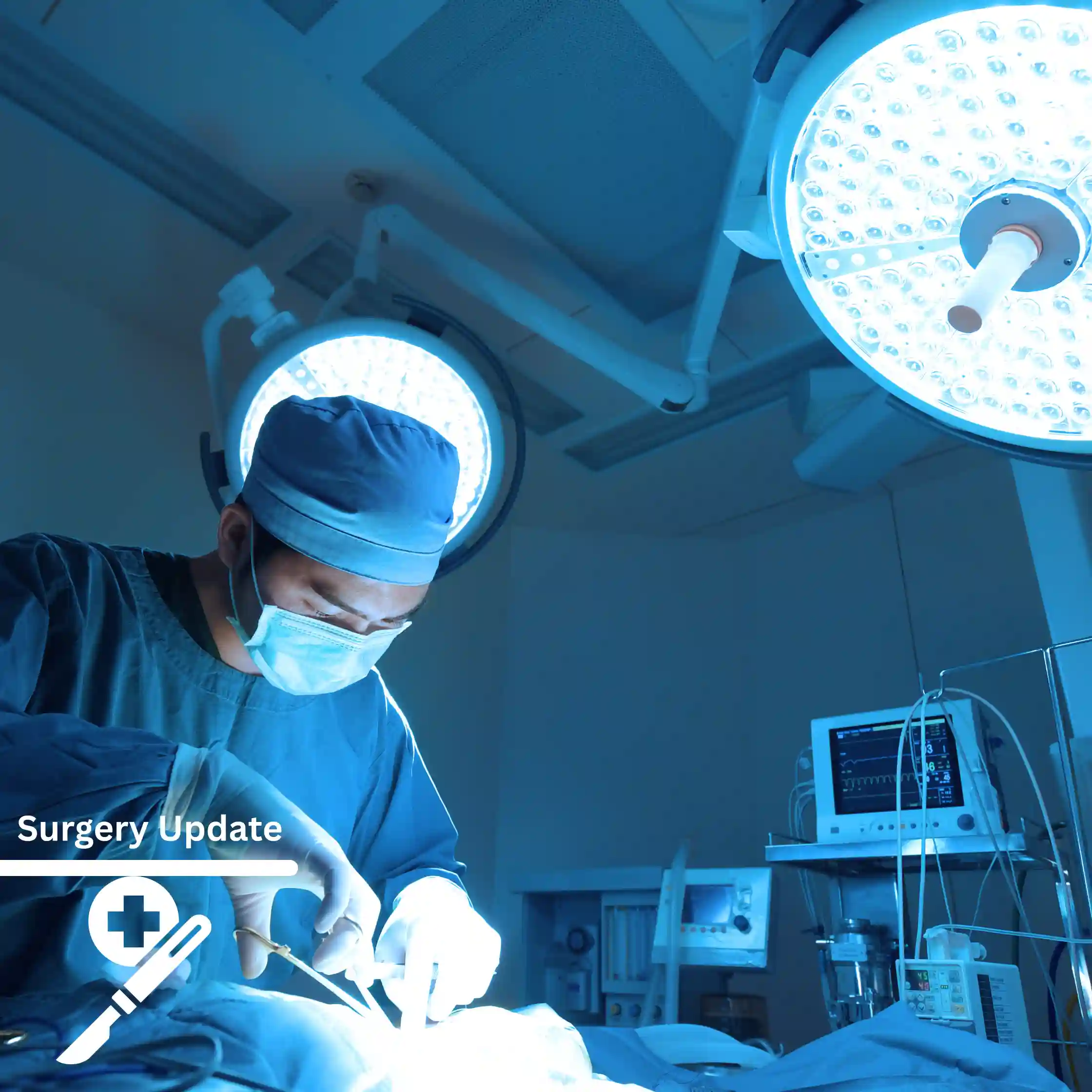
Laparoscopic surgery — also called minimally invasive surgery — is a technique in which operations are performed through small cuts (usually 0.5 to 1 cm) instead of one large incision. A tiny camera called a laparoscope is inserted through one of these cuts, giving the surgeon a magnified, high-definition view of the inside of the abdomen on a screen.
Surgical instruments are passed through the other small cuts to perform the operation. No large opening, no large scar.
Which Procedures Can Be Done Laparoscopically?
At NH MMI Hospital, Raipur, I routinely perform the following laparoscopic procedures:
- Cholecystectomy — Gallbladder removal for gallstones
- Appendectomy — Appendix removal
- Hernia repair — Inguinal, umbilical, incisional, and hiatal hernia
- Anti-reflux surgery — For chronic acid reflux / GERD
- Colorectal surgery — For colon and rectal conditions
- Bariatric surgery — For obesity management
- Diagnostic laparoscopy — When a direct visual examination is needed
Over 25 years and 10,000+ surgeries, I have seen laparoscopy transform outcomes for patients across Raipur, Durg, Bilaspur, and Chhattisgarh.
Laparoscopic vs Open Surgery — What Is the Difference?
Patients often ask me to compare the two. Here is a straightforward comparison:
- Incision size: Laparoscopic — 3 to 4 small cuts of 0.5–1 cm | Open — one large cut of 10–20 cm
- Pain: Laparoscopic — significantly less | Open — considerable post-operative pain
- Hospital stay: Laparoscopic — 1 to 2 days | Open — 5 to 7 days typically
- Return to work: Laparoscopic — 3 to 7 days | Open — 4 to 6 weeks
- Scar: Laparoscopic — minimal, barely visible | Open — visible long scar
- Infection risk: Laparoscopic — lower | Open — higher due to larger wound
What Is Recovery Like After Laparoscopic Surgery?
One of the most common concerns I hear is about recovery time. Here is what most patients can expect:
- Day 1: Surgery done, patient rests, light liquids in the evening
- Day 2: Walking in the room, soft diet, most patients discharged
- Day 3–5: Home rest, light activity, no driving
- Week 1–2: Back to desk work, light household activity
- Week 3–4: Full normal activity including exercise
These timelines vary based on the type of surgery, patient's age, and overall health. I give each patient a personalised recovery plan before discharge.
The Cost Question — Is Laparoscopic Surgery Expensive?
This is one of the most misunderstood aspects of laparoscopic surgery — and one I am asked about almost every day.
The myth: "Laparoscopic surgery costs much more than open surgery."
The reality: While the procedure itself may have a slightly higher surgical cost, the total cost is often comparable — or even lower — than open surgery when you factor in:
- Shorter hospital stay (1–2 days vs 5–7 days)
- Fewer medicines and dressings needed
- Faster return to work — less income loss
- Lower risk of complications requiring re-admission
Additionally, most health insurance policies in India — including CGHS, ECHS, and Ayushman Bharat (PMJAY) — cover laparoscopic procedures. Our team at NH MMI can help verify your coverage before surgery.
Patient Stories — Real Experiences from Raipur
Over the years, I have operated on patients from across Chhattisgarh — Raipur, Durg, Bilaspur, Korba, Rajnandgaon, and beyond. Here are a few examples of what patients experience:
"I had a gallstone for 2 years and kept delaying surgery out of fear. After laparoscopic cholecystectomy, I was home the next day and back at work in 5 days. I wish I hadn't waited so long." — Patient, 44, Raipur (name changed)
"My hernia had been troubling me for over a year. I thought I would need a big operation and a month of rest. Laparoscopic repair took less than 45 minutes and I was walking the same evening." — Patient, 52, Durg (name changed)
"I came with appendix pain at night. Emergency laparoscopic appendectomy was done within hours. I went home in 2 days and there was barely any scar." — Patient, 28, Bilaspur (name changed)
Is Laparoscopic Surgery Right for You?
Not every patient or every condition is suitable for laparoscopy. Factors like previous abdominal surgeries, obesity, and the complexity of the disease may influence the surgical approach. In some cases, starting laparoscopically and converting to open surgery mid-procedure is the safest option.
This is why a proper preoperative evaluation and a detailed conversation with your surgeon matters. When you visit my OPD, I review your history, imaging, and overall health before recommending any approach.
Why Choose NH MMI Hospital, Raipur?
- 25+ years of experience in laparoscopic and robotic GI surgery
- 10,000+ successful surgeries performed
- Advanced laparoscopic and robotic surgery infrastructure
- Dedicated pre-operative counselling for every patient
- Insurance and CGHS/ECHS/Ayushman Bharat coordination support
- Patients from across Chhattisgarh served — no need to travel to Mumbai or Hyderabad
Dr. Rajesh Sinha's Message
"Fear and misinformation delay treatment. If you have been told you need surgery — or if you suspect a GI problem — please come for a consultation. Understanding your options is the first step. Laparoscopic surgery in Raipur is safe, accessible, and available to you."
Expert GI Surgery in Raipur
If you have a GI condition that may need surgery, timely consultation can prevent complications and ensure the best outcome.
Dr. Rajesh Sinha | Laser, Laparoscopic & Robotic GI Surgeon | NH MMI Hospital, Raipur
25+ Years of Experience | 10,000+ Successful Surgeries | Expertise in Laparoscopic & Robotic GI Procedures
Call Now: +91 99938 20657