Robotic Surgery in Raipur: What Patients Need to Know
What Is Robotic Surgery?
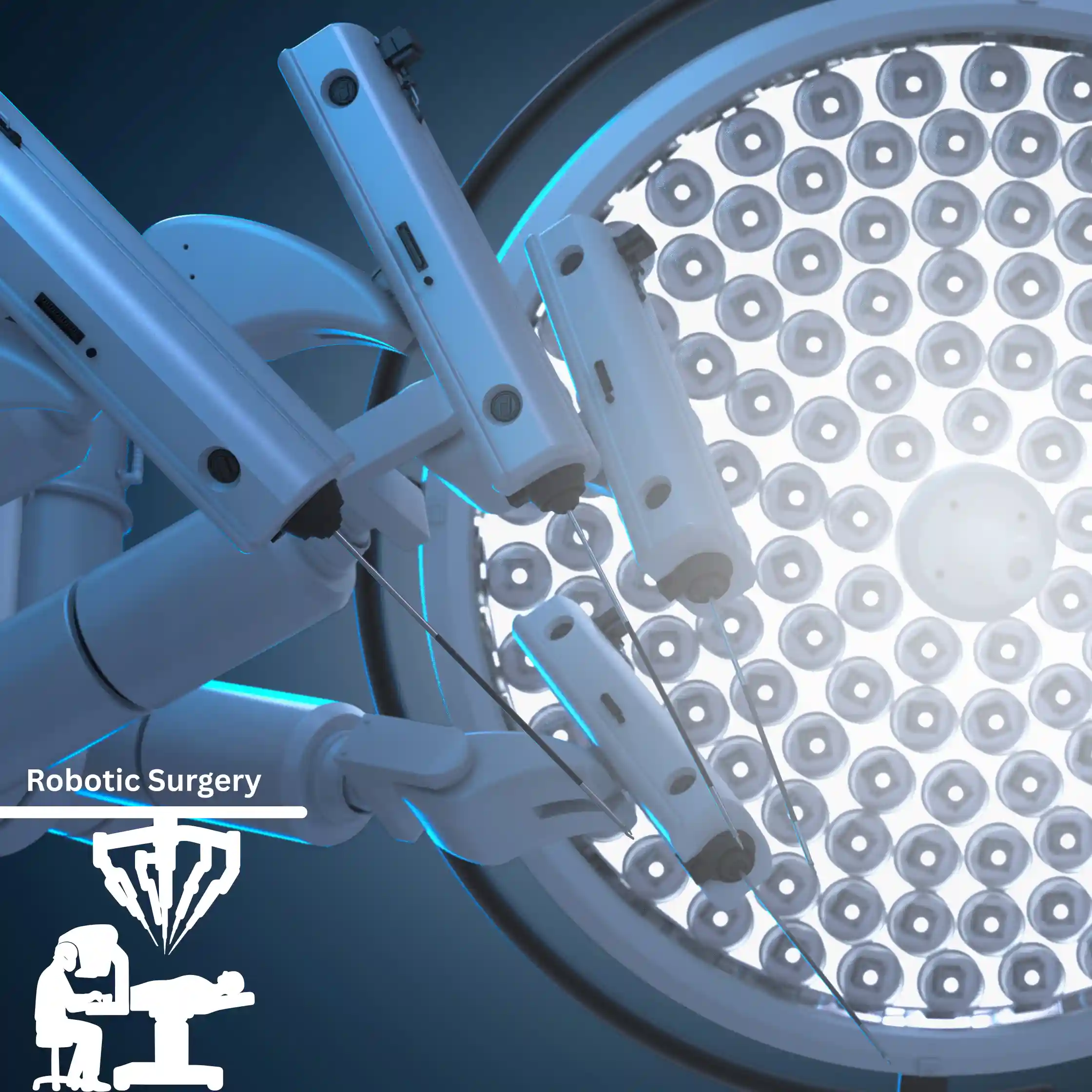
Robotic surgery is a minimally invasive surgical approach in which the surgeon operates using a computer-controlled robotic system. The most widely used system globally is the Da Vinci Surgical System — which I work with at NH MMI Hospital, Raipur.
The system has three components: a surgeon console where I sit and control the instruments, robotic arms that hold and move the surgical instruments inside the patient's body, and a high-definition 3D camera that gives me a magnified view of the surgical site.
The robot does not operate on its own. Every single movement of the robotic arms is controlled by me in real time. The robot simply translates my hand movements with greater precision, stability, and range of motion than the human hand alone can achieve.
How Is Robotic Surgery Different From Laparoscopic Surgery?
Both robotic and laparoscopic surgery are minimally invasive — meaning small cuts rather than one large incision. The key differences:
- 3D vision vs 2D: Robotic surgery provides a high-definition 3D view of the surgical site; standard laparoscopy typically uses a 2D camera.
- Greater instrument flexibility: Robotic instruments can rotate 360 degrees and have 7 degrees of movement — far more than the human wrist. This matters especially in tight spaces.
- Tremor elimination: The robotic system filters out any natural hand tremor, making movements more precise.
- Ergonomics: The surgeon operates from a comfortable seated console, reducing fatigue during long procedures.
For straightforward procedures, laparoscopic surgery remains excellent and highly effective. For complex procedures — particularly in confined anatomical spaces, revisional surgery, or cases requiring precise dissection — robotic surgery offers meaningful advantages.
Which Procedures Can Be Done Robotically?
In my GI surgery practice at NH MMI Hospital, Raipur, I perform the following procedures robotically:
- Robotic hernia repair — including complex and recurrent hernias
- Robotic cholecystectomy — gallbladder removal
- Robotic colorectal surgery — including rectal resections
- Robotic anti-reflux surgery — for GERD/acid reflux
- Robotic bariatric surgery — weight loss procedures
- Complex revisional GI surgery
What Are the Benefits of Robotic Surgery?
- Smaller incisions — typically 3-4 cuts of less than 1 cm each
- Less blood loss during the procedure
- Lower risk of infection compared to open surgery
- Less post-operative pain
- Faster recovery — most patients are discharged within 1-2 days
- Minimal scarring
- Earlier return to normal activity — desk work within 3-5 days for most procedures
Does the Robot Perform the Surgery Independently?
This is the most common misconception. No — the robot does not operate on its own. Every movement of every instrument is controlled by me, the surgeon, in real time from the console. The robotic system has no autonomous capability. It is a precision tool — I am always in complete control.
What Is Recovery Like After Robotic Surgery?
Recovery after robotic surgery is generally similar to or faster than laparoscopic surgery, and significantly faster than open surgery:
- Hospital stay: 1-2 days for most procedures
- Return to desk work: 3-5 days
- Light walking: encouraged from day 1
- Full normal activity including exercise: 2-3 weeks
- Driving: typically after 1 week
Why I Attended SRS 2026 — And What It Means for My Patients in Raipur
The Society of Robotic Surgery (SRS) Annual Meeting is one of the most important conferences in the world for surgeons who perform robotic procedures. At SRS 2026 in Florida, I had hands-on experience with the latest systems including the Da Vinci 5 — the newest generation of the world's most widely used robotic surgical platform — and the MEDBOT system.
Attending this conference as a Global Affiliate Society Member is not just a professional milestone — it directly benefits my patients in Raipur. It means I am trained on the latest techniques, aware of the newest evidence, and connected to a global community of the best robotic surgeons in the world.
The standard of robotic surgery available to my patients at NH MMI Hospital, Raipur is the same standard being discussed and refined at the highest levels of the surgical world.
Frequently Asked Questions
Is robotic surgery available in Raipur?
Yes. At NH MMI Hospital, Raipur. Dr. Rajesh Sinha performs robotic GI surgery for patients across Chhattisgarh.
Does the robot operate on its own?
No. The surgeon controls every movement in real time. The robot is a precision tool, not an autonomous system.
How long is recovery after robotic surgery?
Most patients are discharged in 1-2 days. Return to desk work in 3-5 days. Full activity in 2-3 weeks.
Is robotic surgery more expensive?
Robotic surgery may carry a higher cost than standard laparoscopic surgery. However the benefits — faster recovery, less pain, earlier return to work — often offset this. Discuss costs and options directly at your consultation.
Do I need to travel to Mumbai for robotic surgery?
No. Robotic GI surgery is available in Raipur at NH MMI Hospital with Dr. Rajesh Sinha.
Medical Disclaimer: This blog is for general awareness and educational purposes only. It does not constitute medical advice. Please consult Dr. Rajesh Sinha or a qualified surgeon for advice specific to your diagnosis and medical history.
Robotic GI Surgery in Raipur
If you have been advised surgery and want to know whether a robotic approach is right for your case — come for a consultation.
Dr. Rajesh Sinha | Laser, Laparoscopic & Robotic GI Surgeon | NH MMI Hospital, Raipur
Call: +91 99938 20657 | drrajeshsinha.in